

The Dragnet Behind the Badge
Every authoritarian expansion of state power needs a villain. In the current American moment, that villain is the undocumented immigrant, and ICE is the instrument being used to build infrastructure that will outlast any single deportation campaign.
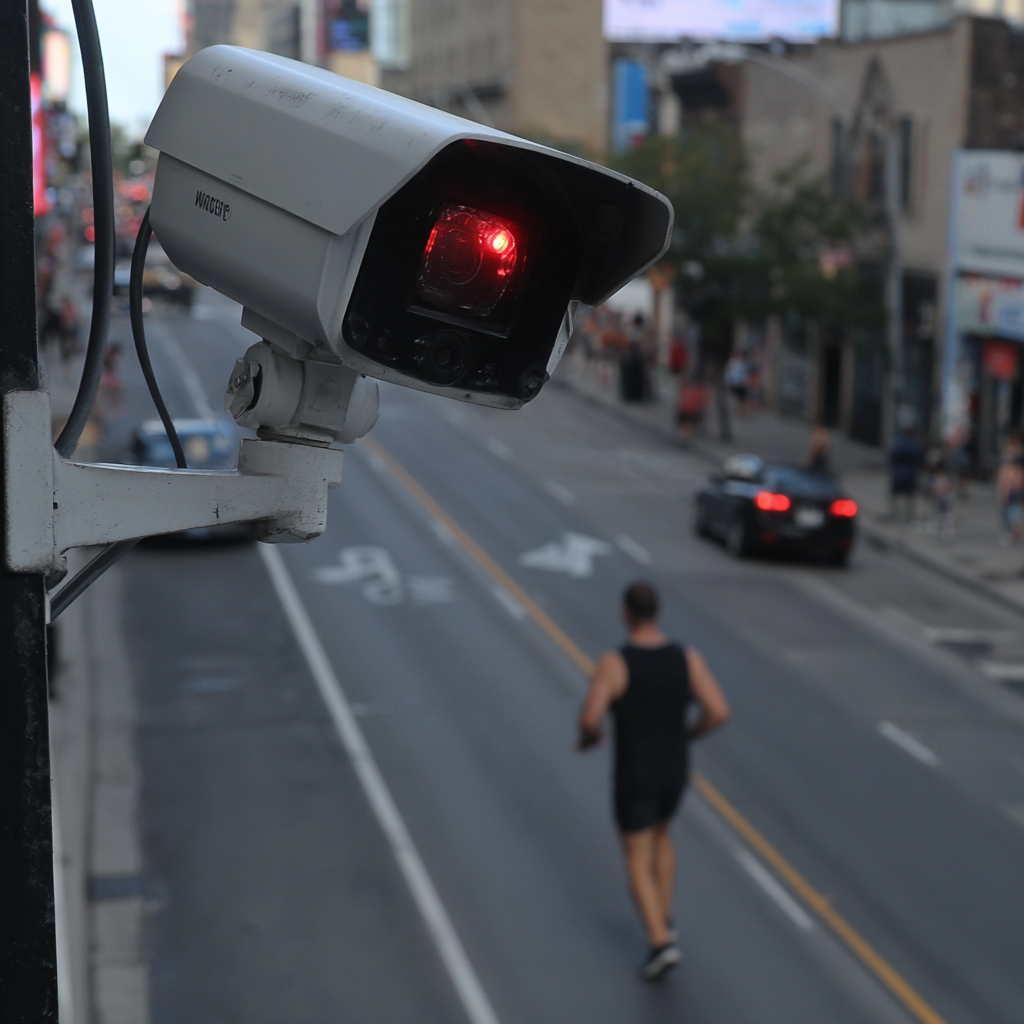
The pattern is not subtle. Over the past several years, federal agencies have quietly assembled a surveillance ecosystem under the banner of immigration enforcement: automated license plate readers blanketing highways, facial recognition at airports and transit hubs, real-time access to state DMV databases, geofencing warrants, and contracts with data brokers who harvest location pings from ordinary apps on ordinary phones. None of these tools ask for immigration status before they collect. They collect everything, from everyone.
ICE has partnered with Palantir to build a vast data fusion platform, pulling together criminal records, social media activity, financial data, and travel history into unified profiles. The stated purpose is finding undocumented people. The actual result is a government database infrastructure with no meaningful legal constraint on how it gets used next, or who it gets used on. The architecture doesn't care about citizenship.
This is the classic pretext play. Build the machinery on a politically safe target, who's going to defend "illegal aliens"? - then let the machinery stand. Future administrations inherit it. Future agencies expand it. The original justification becomes irrelevant. The tools remain.
Consider the scope creep already underway. Customs and Border Protection asserts jurisdiction within 100 miles of any U.S. border or coastline, a zone that contains roughly two-thirds of the American population, including the entirety of New York, Los Angeles, Chicago, Houston, and Miami. Within this zone, reduced Fourth Amendment protections apply. Immigration enforcement is the legal logic that created this constitutional carve-out. Everyone inside it lives under it.
The power grab isn't just technological, it's institutional. ICE and DHS have pushed to access IRS taxpayer data, attempted to pull Social Security records, and sought to embed agents in city and state agencies that historically operated independently. When local police departments are deputized as immigration enforcers through 287(g) agreements, the lines between federal surveillance and local policing dissolve. What emerges is a unified enforcement apparatus with tentacles in every jurisdiction, accountable to the executive branch alone.
Sanctuary city policies, the primary resistance to this fusion, are being threatened with federal funding cuts and legal pressure. The message is clear: cooperate with the surveillance state or be starved of resources.
The threat here isn't hypothetical. It's structural.
A government that builds mass surveillance tools justified by immigration enforcement has built mass surveillance tools. The justification is a political costume. What remains underneath is a permanent capability: to track, identify, and act on any person, anywhere, at any time, once the political will exists to do so.
ICE is the wedge. The door its opening is much, much wider than immigration. And doors opened by executive power are rarely closed by the same hands that opened them.
Comments ()